Inside Dentistry (ID): From your perspective as both a clinician and educator, how do you define successful adhesion beyond initial bond strength?
Matthew R. Miller, DDS: While high immediate bond strength is important, true success is measured over time. The key questions are whether the restoration remains in place and how well the margins hold up. When we see long-term marginal integrity without staining or breakdown—and the restoration continues to function as intended—that indicates successful adhesion. Longevity, stability, and resistance to degradation are ultimately more meaningful than an initial bond strength value alone.
ID: What do you consider the most underestimated challenges in achieving durable dentin adhesion in everyday clinical practice?
Miller: Two key challenges are proper isolation and effective light curing. Even with today’s advanced adhesive systems, contamination of the bonding surface can significantly compromise outcomes. Equally important is ensuring adequate polymerization through correct light-curing technique, as insufficient curing prevents the adhesive from achieving optimal bond strength.
Beyond these factors, durable dentin adhesion depends on forming a stable hybrid layer. This requires careful handling of dentin to avoid over-etching or excessive demineralization, while allowing adequate resin infiltration and formation of resin tags within the tubules. Creating a stable, well-polymerized, and contamination-free dentin interface is essential for long-term adhesive success.
ID: Many modern adhesive strategies emphasize simplification. Where does simplification genuinely help clinicians, and where can it become a liability?
Miller: Simplification can be very helpful by reducing the number of materials and steps required, which in turn decreases technique sensitivity. Universal and simplified systems allow clinicians to achieve reliable outcomes even when conditions are not ideal, and they help streamline workflow.
However, simplification can become a liability if the chemistry is pushed too far. Not all systems are created equal, and combining too much technology into a single bottle can sometimes affect stability or performance. If the acidity is not well balanced or the material is used outside its intended indications, bond quality can suffer.
That said, most modern systems are quite stable, with improved shelf life and fewer storage requirements. The greater risk today is not the material itself, but improper use—particularly when clinicians do not fully follow manufacturer instructions or understand how a material is meant to function in different clinical scenarios.
ID: Based on your observations, where do adhesive failures most often originate: material limitations, clinical technique, or unrealistic expectations of the system?
Miller: Material limitations are very low on the list. Modern adhesive materials are excellent. Most failures originate from clinical technique or from using materials in situations they were not designed for. Issues such as poor isolation, surface contamination, inadequate solvent evaporation, or insufficient light curing are common contributors. Clinicians may assume that because a surface appears hardened, it has been fully polymerized, which is not always the case.
Unrealistic expectations also play a role when materials are pushed beyond their intended applications. Overall, failures most often stem from technique sensitivity and protocol deviations rather than deficiencies in the materials themselves.
ID: In endodontically treated teeth with significant structural loss, what adhesive principles are most critical for long-term restorative success?
Miller: Preservation of tooth structure is the most important factor in the long-term success of endodontically treated teeth. Adhesive dentistry allows us to be more conservative with tooth preparation, which is especially valuable when structural loss is already significant.
From a mechanical standpoint, having a circumferential ferrule of approximately 2 mm and adequate remaining wall thickness greatly improves outcomes. Adhesively, achieving a stable dentin bond is critical. Enamel bonding is predictable; dentin bonding is where success or failure often occurs.
By combining reliable dentin adhesion with appropriate mechanical design, we achieve both chemical and mechanical retention. Long-term success depends not only on the quality of the root canal treatment, but equally on the restorative strategy used to seal and protect the tooth.
ID: As someone involved in product development and clinical evaluation, what gaps do you see between laboratory adhesion data and real-world clinical performance?
Miller: Laboratory testing allows for tight control of variables such as temperature, humidity, air pressure, and polymerization conditions. In clinical practice, those conditions are far more difficult to control, and the human and patient factors introduce variability.
The challenge is translating laboratory data into predictable clinical performance. This is where modern adhesives have made meaningful progress by reducing technique sensitivity. While traditional multi-step systems remain gold standards when used perfectly, newer universal systems can achieve comparable results with fewer steps and greater tolerance for variability.
That said, the fundamentals still matter: proper isolation, solvent evaporation, and adequate polymerization remain essential regardless of the system used.
ID: If you could improve one fundamental aspect of adhesive dentistry to better support complex interdisciplinary treatment, what would it be?
Miller: Consistency. Ideally, we would have systems that deliver reliable outcomes across providers with different techniques and workflows. That is a significant challenge, but modern universal adhesives are moving us closer to that goal by allowing multiple application modes within a single system.
From a materials standpoint, we are already close. Many current adhesives incorporate built-in primers, self-etching capabilities, and compatibility with dual-cure materials. Continued improvements in user-friendliness and predictability will further enhance interdisciplinary treatment outcomes.
ID: What key question about adhesive dentistry is often overlooked but deserves
more attention?
Miller: One major issue is helping clinicians make sense of the sheer number of products and philosophies on the market. There is ongoing debate between traditional multi-step systems and newer universal adhesives, and both have strong scientific support.
What matters most is flexibility. Truly universal systems allow clinicians to adapt their approach to the case without switching materials or increasing inventory. For example, self-etching systems can prevent unintended contamination of zirconia surfaces that can occur with phosphoric acid in etch-and-rinse protocols.
Modern adhesives also integrate primers for multiple substrates, allowing reliable bonding to tooth structure, ceramics, and zirconia. This flexibility improves efficiency while maintaining excellent outcomes.
ID: Is there anything you would like to add about your clinical experience with newer generations of adhesive systems?
Miller: Over the past 18 years in practice, I’ve had excellent results with both traditional and modern systems when they are used correctly. While earlier generations had limitations, current universal adhesives—particularly later generations—have demonstrated strong clinical performance.
Although long-term data is still evolving, the clinical outcomes we are seeing today are very promising. Success ultimately depends on understanding the material, following protocols, and applying sound adhesive principles.
ID: What do you see as the future of adhesive dentistry?
Miller: Materials are already performing at a very high level. In many studies, failures occur within the tooth or restorative material rather than at the adhesive interface, which speaks to how far adhesion has progressed.
Looking ahead, I believe advances will focus on enhanced biocompatibility and bioactivity, potentially incorporating regenerative capabilities alongside adhesion. Artificial intelligence may also accelerate material development and testing by analyzing large datasets more efficiently.
The future is less about dramatically increasing bond strength and more about improving how materials interact with biology, how predictably they perform in real-world conditions, and how effectively clinicians use them.
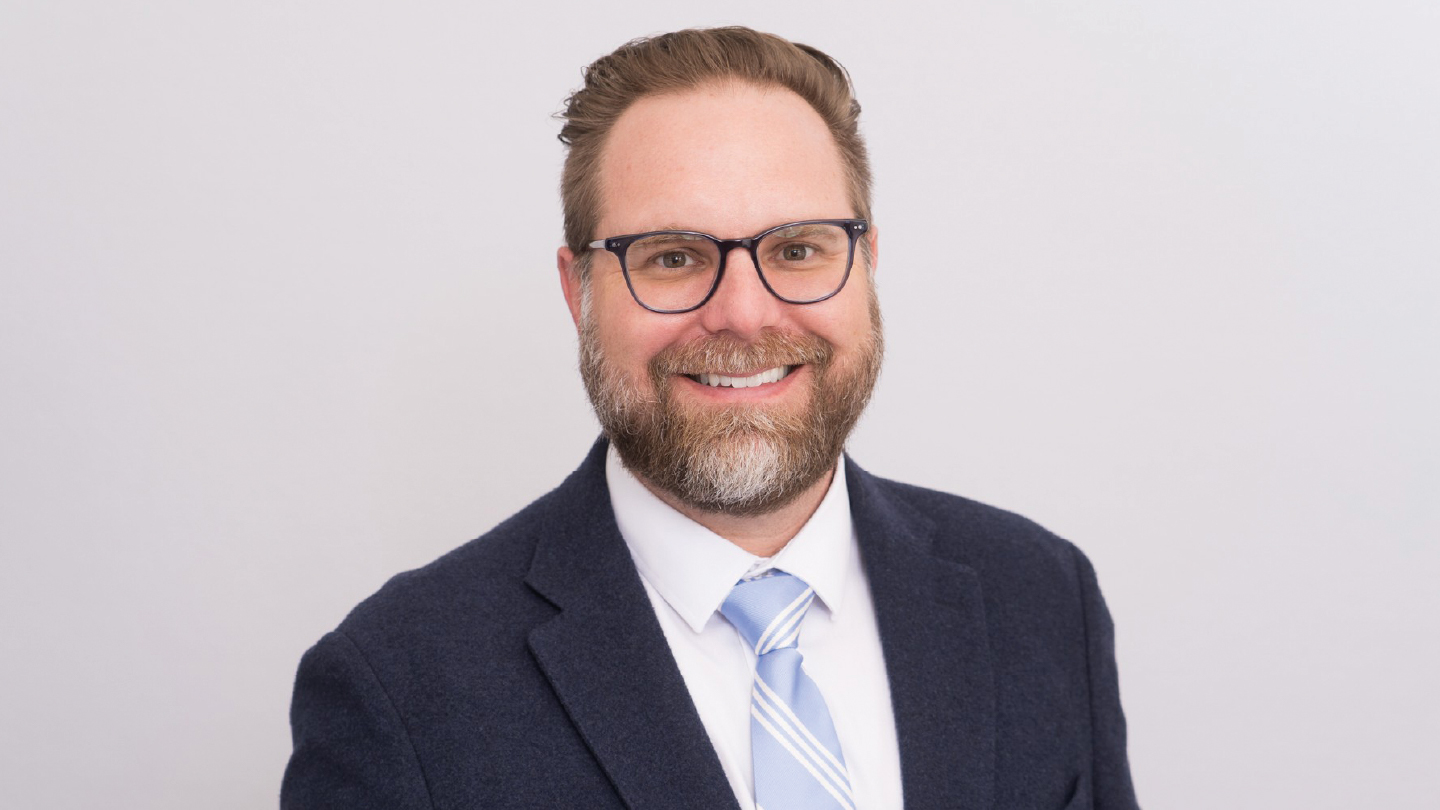
Matthew R. Miller, DDS, is a Clinical Associate Professor in the Department of Restorative Sciences at the UNC Adams School of Dentistry. A nationally and internationally recognized lecturer and published author on endodontics and restorative materials and techniques, he earned his undergraduate degree from the University of North Carolina at Chapel Hill and his DDS with High Distinction from New York University College of Dentistry. Dr. Miller has been a Restorative Advisor for a Charlotte chapter of the Seattle Study Club. Dr. Miller serves on the Kerr Endodontic and Restorative Advisory Boards and has extensive clinical experience in complex restorative care.
