Inside Dentistry (ID): How has a facially driven, digitally planned approach changed the way you diagnose and position implants compared to traditional methods?
Christian Coachman, CDT, DDS: We know the classic evolution of implant planning, starting with what was called bone-driven implant planning—basically no planning whatsoever. You simply look at where the bone is, place the implant, and hope for the best. From there, the field moved into prosthetically driven implant planning. In this approach, you first determine where the crown should be and then reverse engineer the implant position to support the ideal position of that future restoration.
Today, we are evolving toward what we call facially driven implant planning. This means that the future crowns are planned and designed in harmony with the patient’s face. So the process starts with facial analysis and a facially driven smile design. You begin by defining where you want to end up. Modern dentistry is facially driven, so the planning process needs to start from the face.
You create a virtual project of where you want the smile to be within the face, then plan the restorations accordingly and reverse engineer the implant positions. From there, you evaluate whether there is enough bone and soft tissue to support that position, and determine whether grafting or augmentation is needed to add bone or soft tissue volume. This allows you to place the implant in the most ideal position based on the prosthetic outcome, which is guided by the facially driven smile design.
In practical terms, this means surgeons should not begin by planning the surgery. Instead, they should begin with the facially driven smile design. When a patient needs implants, the first person to actually plan the case needs to be a smile designer, not a surgeon.
ID: How important is prosthetically and facially driven implant placement in your philosophy?
Dr. Coachman: My philosophy is 100% based on what I just described. We need to start with the end in mind. We need to plan from the outside in. We need to start from the face and reverse engineer the plan. That’s how we plan every case. In the past, this concept was relatively easy to say but very hard to execute. Without technology—without 3D software—it was difficult to make this approach happen consistently in daily practice.
The real revolution in planning in dentistry, and of course in implant dentistry, happened when we became able to simulate treatment in 3D using software. It advanced even further once we were able to integrate the patient’s face into the software and match it with the CBCT and the scans of the patient’s mouth. That allows us to start from the face in the software, develop a facially driven 3D project, and then overlap that project with the CBCT and the STL—in other words, with the bone and the gingival structures.
From there, we can clearly understand where we are and where we want to be, which facilitates defining the best treatment plan to get there. This is how we believe dentistry should be practiced. This should be the normal, not the exception.
ID: What are the most common mistakes you still observe clinicians making in implant planning and placement?
Dr. Coachman: The mistake we still see is that, even though it’s 2026 and these technologies are extremely accessible to any dentist—and most labs already have the software—proper facially driven planning remains the exception. Many clinicians and surgeons still place implants by guessing. They may feel they roughly know where the implant should go, perform a clinical evaluation, but miss the opportunity to fully understand the size of the defect and its relationship to the intended outcome. Then they just go for it and hope for the best.
Unfortunately, hoping for the best is still the rule, not the exception, despite the evolution of technology and its accessibility today.
ID: What systems or workflows have you developed to improve interdisciplinary communication and avoid restorative surprises in
implant cases?
Dr. Coachman: Personally, I have spent more than 15 years collaborating with software companies to implement this philosophy into the software. Years ago, software didn’t allow the patient’s face to be included—there was no face integration. Being able to bring in facial pictures or facial scans and match them to the STL and CBCT was the first revolution. This created what we call the patient avatar in the software.
The next step was developing tools within the software to create a smile, facially driven guidelines—2D outlines that help develop a 3D diagnostic design in harmony with the face. At that time, most surgical and implant software was not designed for smile diagnostic designs. That was a major limitation. These two things—implant planning and smile design—should always be integrated. You cannot properly plan an implant without designing the smile. The implant position should be reverse-engineered from the smile.
An implant software should, therefore, be mandatorily a facially driven smile design software. You need the face, and you need the ability to design. Importantly, this is a diagnostic design, not a restorative design. That was the third problem we faced. When we started developing these solutions, every time we mentioned “smile design,” people thought we meant restorations. But I was not talking about the restoration itself. I was talking about creating a vision that allows us to plan the treatment and procedures in a way that ultimately enables proper restorative planning.
At the end, this project can be used to design the restorations, but initially, it is about treatment planning, not restorations. For example, older software required you to define a prep finishing line to create a wax-up. That was the wrong philosophy—you’re being asked to wax up the case before even knowing whether the patient needs preps, how much, or whether extractions or implants are required.
Introducing the pre-operative diagnostic design into software was a paradigm shift. It allows us to plan the treatment first, develop the vision, and then use that initial wax-up to plan the restoration later. This same approach applies to orthodontic software, which had similar limitations.
Nowadays, orthodontic software also supports smile design. First, you design the smile; second, you plan the orthodontics. Similarly, in implant cases, first you design the smile; second, you plan the implants. This approach allows you to truly understand the prognosis and communicate more honestly with the patient about the expected outcome.
ID: How does digital visualization support patient understanding and case acceptance in implant treatment?
Dr. Coachman: That is, I would say, the biggest bonus of everything I just described. If you’re using 3D software correctly, it means you are treating the patient digitally before treating them in reality. You are designing the vision before deciding on the procedures. This approach allows you to make clinical decisions toward a clearly defined visual goal. It gives you a structured story to present to the patient—you become a visual storyteller. For the first time, the patient can see in 3D what is going to happen in the real world. It’s much easier to justify and explain your clinical decisions when you can show both the reasoning and the anticipated outcomes visually.
The example from orthodontics with Invisalign illustrates this well. The revolution happened when patients could see their teeth moving before accepting treatment. They could see the outcome in advance, which improved education, motivation, compliance, commitment, and shared responsibility. Instead of simply saying, “Trust me, this is best for you,” the patient is truly brought on board.
In implant dentistry, the same principle applies. With 3D visualization, the patient can understand the size of the defect, the real challenges involved, and the complexity of the procedure. Even if the outcome is not perfect, the patient is more likely to value the result because they understood from the beginning how challenging the situation was. They realize that any gain at the end is a plus, a bonus.
This is what I call dental visual storytelling. And you can only achieve it if you treat the patient digitally before treating them for real.
ID: What separates clinicians who truly leverage digital technology for implant success from those who simply own the tools?
Dr. Coachman: For me, that’s the definition of a modern dentist versus a non-modern dentist. Everyone likes to feel modern, but to truly be modern, you need to use modern tools for real—not just acquire them or buy them, but actually apply them for the right purpose.
I always tell dentists, especially surgeons, that technology should be leveraged where you need the most help. Executing the surgery is actually where you need the least help. You’ve been placing implants for years without technology. I’m not saying the surgery is easy—it’s not—but it is the easiest part of the process. Diagnostics and treatment planning are far more difficult, and that’s where most mistakes occur.
Being a modern dentist is really about using technology for diagnostics, interdisciplinary communication, decision-making, risk assessment, treatment planning, and patient communication—not just for the execution of the procedure. Guided execution is a bonus, a plus. But the real modern mindset is using technology where it provides the most value, where mistakes are most likely, and where it can make the biggest impact.
That’s where the revolution happens. That’s where digital dentistry brings the most value. And that’s also where 99% of dentists still don’t use technology.
ID: When an esthetic implant case requires retreatment, whether it’s your own case or one referred from another clinician, how do you approach the diagnostic and decision-making process?
Dr. Coachman: By using the approaches we’ve shared here, the primary goal is to reduce the chances of complications. But even so, situations will arise where the outcome isn’t what you wanted—either due to clear mistakes or factors beyond our control. In those cases, we still need to address the issues and sometimes redo the treatment.
When redoing a case—whether it’s one you originally treated or a patient coming from someone else—it’s the same process: risk assessment, evaluating pros and cons, and determining prognosis. You need to be honest and clear with the patient about the probabilities of option A, option B, and option C.
Once again, this starts with understanding the situation yourself and then helping the patient understand it. That’s where 3D visualization comes in. You need to evaluate why the case isn’t ideal and see the relationship between the existing situation and the ideal outcome.
With 3D technology, you can clearly see the discrepancy between where you are, which is not good, and where you want to be, which is very good, and you can align that understanding with the patient. Then, using your biological expertise, you can explain the prognosis clearly and set realistic expectations.
ID: How do you see digital workflows, AI, and facial analysis influencing the future of implant dentistry?
Dr. Coachman: Digital workflows are becoming the new normal, and starting from the face is the new standard approach. AI is beginning to understand and support this shift. Step by step, AI will assist us on two fronts.
First, AI will provide a high-quality, fast, facially driven starting point—the smile design or diagnostic wax-up. This will make the process more democratic. Even if a surgeon doesn’t want to focus on this initially, AI can provide it automatically. When planning an implant, AI will suggest a potential outcome, which encourages everyone to see what they need to see and plan more effectively. Essentially, AI helps us build the vision and define the ideal outcome before any treatment begins. This is already happening, though it’s still labor-intensive. Currently, only high-end aesthetic dentists are using these tools, but in a few years, it will become routine: you scan a patient, and the digital plan is generated.
Second, AI will assist in biologically and surgically driven decision-making. For example, you can input a radiograph or describe a specific situation, and AI will provide evidence-based guidance—common-sense suggestions based on all available data. It might tell you, for instance, that immediate loading carries a 70% risk in this scenario or outline factors that make it less advisable. AI doesn’t make the decision for you, but it gives a high-quality starting point that you can refine using your clinical experience.
I see these two pathways developing now. They are not yet widely integrated into daily practice for most surgeons, but they are coming quickly. Ultimately, this will raise the baseline of everyday implant dentistry and likely reduce the number of avoidable mistakes.
ID: You often highlight the emotional aspects of dental treatment and how care impacts a patient’s mental well-being. Could you explain how this influences your approach to dentistry?
Dr. Coachman: Emotional dentistry is a term I coined more than 15 years ago, and it has become one of the three pillars of the Digital Smile Design methodology. When I teach DSD, I emphasize three components: comprehensive dentistry, guided dentistry, and emotional dentistry. Comprehensive dentistry focuses on case planning, which is what we have been discussing so far. Guided dentistry is about translating that plan accurately into the patient’s mouth. Emotional dentistry is about the patient’s experience and everything we can do to elevate it. This became a major focus for me through studying hospitality, communication, psychology, human behavior, and body language. It involves onboarding the patient, training the team, improving case acceptance, understanding each patient’s motivation and personality, and becoming the best communicator for the individual sitting in front of you. It’s about listening to learn, building trust, and helping the patient feel confident and understood during the consultation.
It’s not easy, and it doesn’t happen by magic—but I consider it a key factor in growing a successful practice. I incorporate these principles into all my courses because, ultimately, if the patient doesn’t say yes, all the technology in the world is useless.
This ethical patient onboarding became a key factor for us to ensure patients are engaged, informed, and comfortable, while we provide more of the dentistry that we love.
About Dr. Coachman
Christian Coachman, CDT, DDS, is founder of Digital Smile Design (DSD) and developer of concepts such as the Pink Hybrid Implant Restoration, Digital Planning Center, Emotional Dentistry, Interdisciplinary Treatment Simulation, and the Digital Smile Donator. A graduate in Dental Technology (1995) and Dentistry (2002) from the University of São Paulo, Brazil, Dr. Coachman has lectured and published extensively on esthetic and digital dentistry, implants, oral rehabilitation, dental photography, and communication strategies. He consults for dental companies, helping develop products, implement innovative workflows, and design marketing strategies, including the Facially Driven Digital Orthodontic Workflow in collaboration with Invisalign®, Align Technology. Dr. Coachman has served as Head Ceramist for Team Atlanta, is an adjunct professor at the University of Pennsylvania School of Dental Medicine, and is coordinator of the Digital Dentistry Postgraduate Program at UniAvan, Brazil.
Dentistry is part of Dr. Coachman’s heritage, spanning six generations, beginning with his great-great-great-grandfather, a Cleveland-trained dentist who moved to Brazil in 1868. Today, he integrates this family tradition with modern approaches to patient care, reflecting DSD’s mission to present “a more human, emotional, and artistic face of dentistry,” helping patients achieve a healthy, confident, and natural smile.
Figures and Images
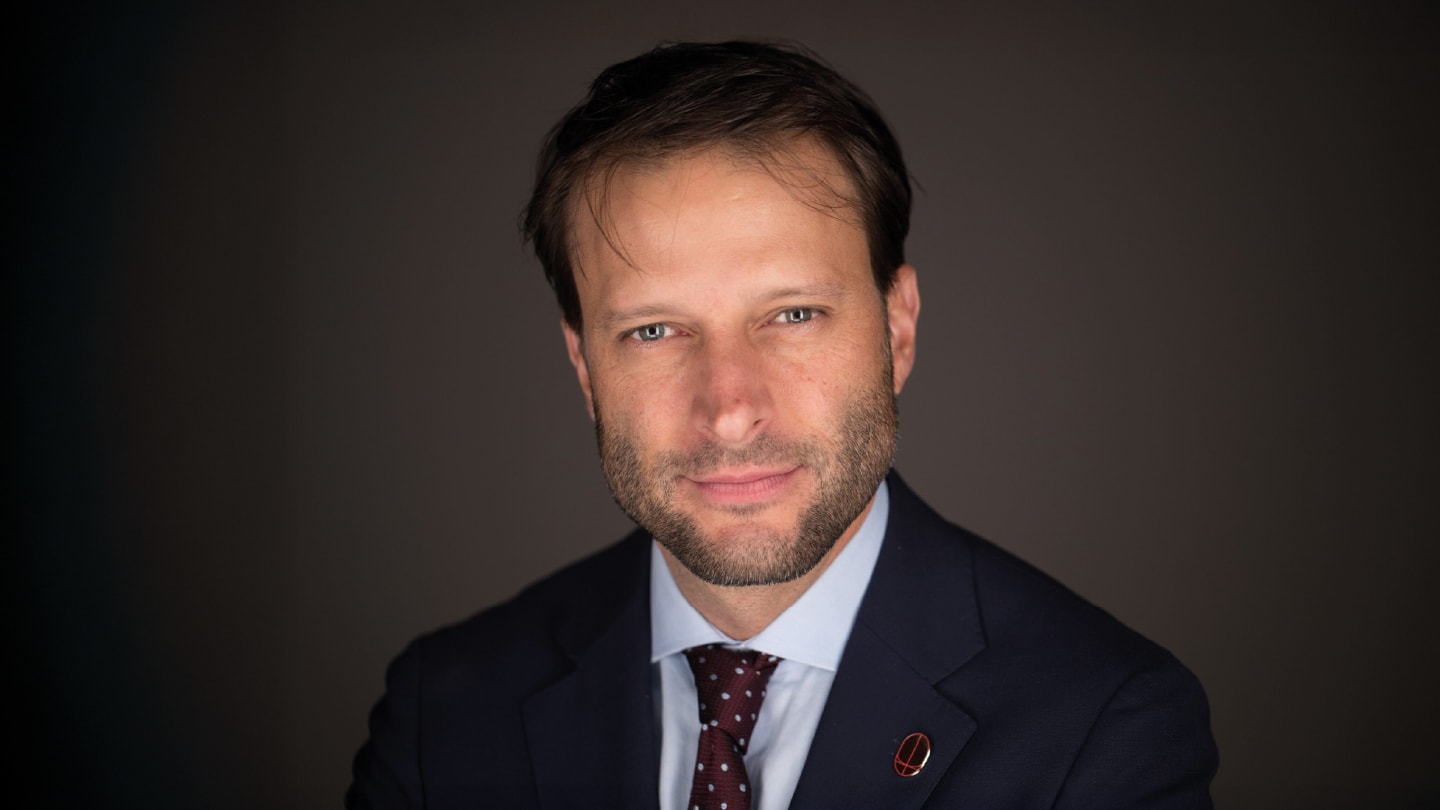
Christian Coachman, CDT, DDS
