Inside Dentistry (ID): From a laboratory standpoint, what are the most important steps clinicians can take when submitting implant cases to help ensure predictable, restorative outcomes?
Peter Pizzi, MDT, CDT: There are several factors that contribute to success between the clinician, surgeon, and laboratory for the patient. For me, the most important step is having a blueprint of where we’re trying to go from the beginning. That means placing the implant with the restorative outcome in mind. Knowing where the final tooth position will be is really the basis for implant placement and communication.
Another factor that sometimes comes into play is the patient’s bony architecture. If an implant is placed too supragingivally, it can limit the technician’s ability to create an ideal emergence profile and properly manage the esthetics and function.
The earlier we can communicate and establish that blueprint for the final restoration, the better opportunity we have to achieve a successful result.
ID: How can dentists improve communication with their laboratory on complex
implant cases?
Pizzi: When we’re working through complex cases—and fortunately in my lab we’re very involved in the planning ahead of time—everything really comes down to a few basic things. First, what does the face look like? Second, where do the teeth belong in the face? And third, is there a gingival component we have to work through, either with restorative materials or by managing where the patient’s gingiva currently is?
So everything starts from those three scenarios: face, white, and pink.
From there, the first goal is to determine where the incisal edge belongs in the patient’s face. We have a protocol we follow for this every time, and I think it’s important for more clinicians and labs to follow consistent protocols. In our office, we tend to treat every case almost like a denture case.
The reason is that denture planning starts with where the teeth belong in the face, and then you work backward to determine how to position everything else to support that outcome.
It’s really no different with complex implant cases. The goal is to determine where the teeth belong in the face—just like you would when setting up a denture—and then work back to the implant position. And from there, we also look at whether there’s a gingival component needed to support the lips, cheeks, and the rest of the face.
ID: In your experience, which phase of implant treatment planning benefits most from closer collaboration between the surgical, restorative, and laboratory teams?
Pizzi: I would argue that all of them are critical. Even with a single-unit case, you’re dealing with high crest, low crest, or medium crest of bone, so knowing the implant position is important. That can easily be communicated by sending the laboratory a radiograph of the implant placement, which is what we do for many of our cases.
In more complex cases, it again comes back to having the technician more involved in the treatment planning—knowing where the implants will be placed and what the final prosthetic will look like.
ID: How has digital workflow improved collaboration between the dental office and the laboratory?
Pizzi: I’m not sure digital necessarily improves communication. It improves the efficiency of transferring information, meaning you’re not pouring as many models or sending physical impressions back and forth. But there are still inaccuracies in digital workflows, just as there are inaccuracies in analog. Part of our job is knowing when and where those inaccuracies occur and managing them through the process, whether we’re working digitally or in analog.
ID: What restorative design principles are most critical for long-term implant prosthesis success?
Pizzi: I think design principles have changed over the years. Obviously, factors like inter-implant distance and bony architecture are still important. But things have evolved because of advances in materials.
Today we’re doing fusion bars and using secondary materials that we didn’t use before—materials that can provide a more flexible relationship to the arch or greater strength and support than what was available in the past.
So proper support and design are still critical, but we do have a lot more freedom today because of the material options available to us.
ID: Are there material choices in implant prosthetics that are frequently misunderstood or misused?
Pizzi: Yes, many of the materials we use today. I wouldn’t say they’re abused, but I do think they’re sometimes oversimplified. Strength isn’t necessarily the only thing we should be looking for, although it’s what manufacturers tend to emphasize most. For example, you can ask almost any dentist the strength of zirconia and they’ll say, “Oh, it’s 1,500 megapascals.” That sounds impressive, but it doesn’t tell the whole story. Hardness doesn’t necessarily equal strength. True strength is really a combination of rigidity and flexibility. That’s why very tall buildings move at the top when they’re subjected to wind—they need a certain amount of flexibility to maintain structural strength.
As a profession, we sometimes focus heavily on hardness without considering the flexible capabilities of materials. As materials continue to evolve, particularly nanohybrid-type materials that combine hardness with higher flexibility, I think those will become a much more important part of the restorative process.
ID: For full arch implant restorations, what do you wish more clinicians understood before beginning treatment?
Pizzi: The truth is that when we’re managing full-arch restorations, there are always products and processes in our profession that become profit centers, or ease-of-use centers, for clinicians. I would argue we’re in that world a little bit today with all-on cases. A clinician’s job, and a laboratory technician’s job, is to save teeth whenever possible. We should always be thinking about minimally invasive options and preserving as many teeth as we can before moving to removing teeth and placing implants.
There are certainly many patients who need all-on-type cases. But the bigger challenge is being astute enough to know when, where, and why. When do we truly need to remove all the teeth, and when can we save some of them?
The reality is that the moment we decide to save teeth, the case often becomes more complicated. It’s easier to remove the teeth, place four or six implants, and restore everything with one material. Preserving natural teeth requires more thought, more planning, and a deeper understanding of the available options.
ID: If you could give every implant clinician one piece of advice from the lab perspective, what would it be?
Pizzi: An implant surgeon told me a long time ago that implants are not teeth. But I would make the argument that implants are teeth. Because the goal of placing an implant or implants is to replace a missing tooth or missing teeth, so we should be always thinking of implant restorative to fit the form, function, and esthetic parameters of the patients we’re working in and not just to put the implant where it seems to be the simplest or easiest to manage from.
About Peter Pizzi
Peter Pizzi, MDT, CDT, is the owner of Pizzi Dental Studio in Staten Island, New York. He served as editor-in-chief of Inside Dental Technology and is an adjunct instructor at New York University College of Dentistry. He is also a graduate, mentor, and recognized specialist at the Kois Center for Dental Excellence, where he contributes to advanced education in esthetics, implantology, and restorative dentistry. A dental technician since 1984, Pizzi has built his career on bridging the gap between laboratories and clinicians. His expertise spans crown and bridge, porcelain, implant restorations, ceramics, muscle function, mandibular physiology, and dental photography. Drawing on decades of hands-on experience, he lectures nationally and internationally to both dentists and technicians, emphasizing communication, collaboration, and strategies for predictable, patient-centered outcomes. He is an active member of the American Academy of Esthetic Dentistry, serves in multiple executive and faculty roles, and continues to study with some of the world’s leading speakers and clinicians, advancing both his craft and the profession.
Pizzi’s approach to dentistry is guided by a simple principle: deliver care as you would for a family member. “What would you do for your mom, brother, sister, or daughter?” he often asks peers in lectures, highlighting the importance of quality, ethics, and thoughtful planning.
Figures and Images
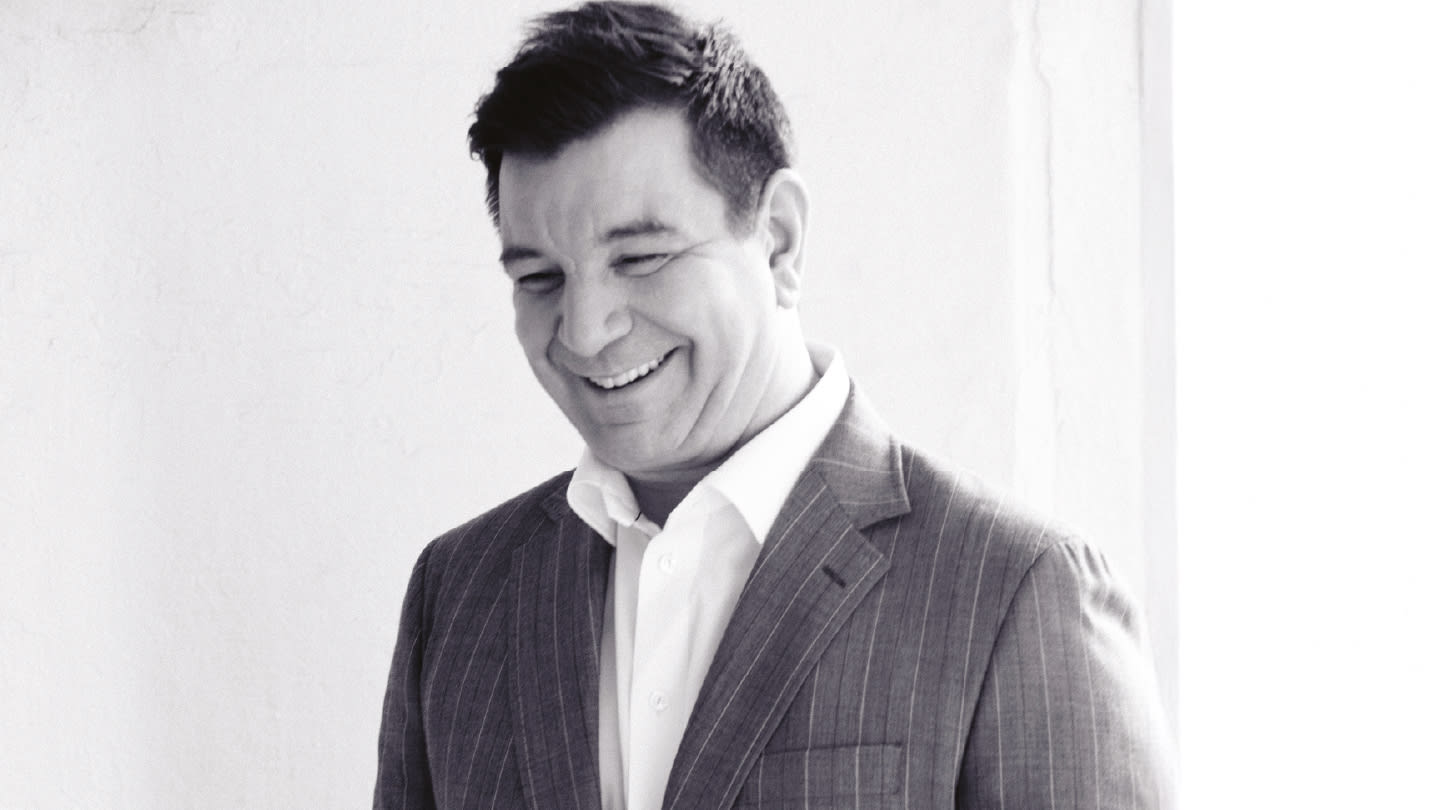
Peter Pizzi, MDT, CDT
