From macroeconomic headwinds to the rapid acceleration of artificial intelligence, speakers at the 2026 Dental VIP Summit painted a picture of an industry at an inflection point—one that will reward clarity of purpose, strategic alignment, and a willingness to embrace change.
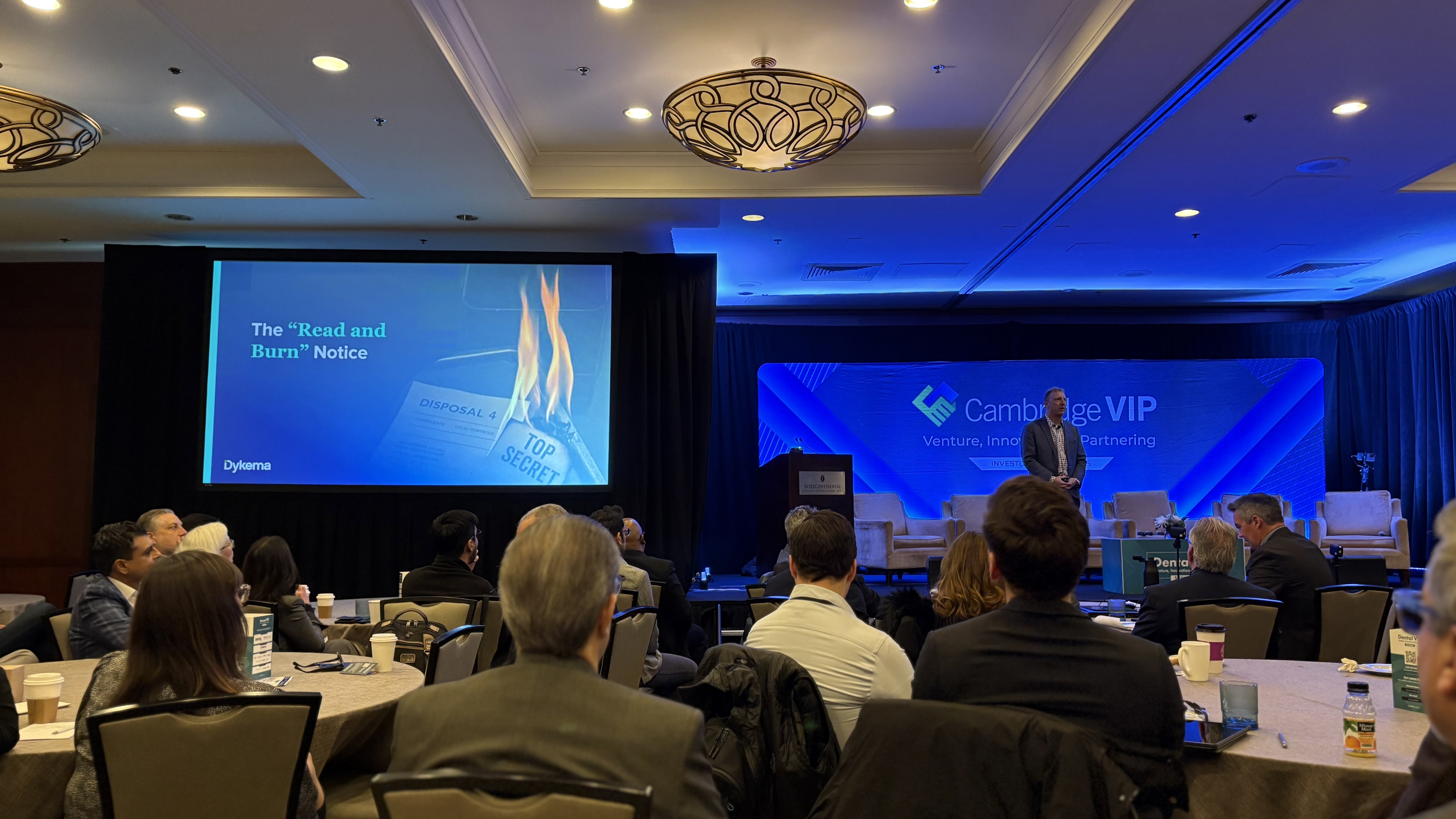
The room was full on February 18 in Chicago, as keynote speaker Brian Colao—Director of Dykema’s Dental Service Organizations Industry Group—opened the second year of this meeting with a candid assessment of the past five years. Beginning with COVID-era shutdowns and moving through reopening challenges, staffing shortages, inflation, a slowdown in mergers and acquisitions, and geopolitical trade pressures, Colao described an environment that has fundamentally reshaped dentistry’s economic model.
Among the most pressing challenges:
-
High cost of capital
-
High cost of labor
-
Persistent labor shortages
-
Inflation in supply costs
-
Flat reimbursement rates
-
Declining EBITDA
“The shine has come off the dental industry, and everyone has been burned,” Colao said, acknowledging that the rapid growth and high valuations of recent years have given way to a more sober reality.
In this environment, he cautioned, technology and services must solve real operational and financial problems. Otherwise, they risk becoming just another “shiny object”—an investment that fails to deliver meaningful returns.
And yet, despite industry challenges, he noted that innovation has never been more abundant, and that means there are numerous opportunities available to those prepared to find new approaches and change the status quo.
Addressing the AI Explosion
Artificial intelligence dominated much of the day’s programming, reflecting its growing influence across clinical, administrative, and educational domains.
Andreas Augat, founder of Dentaiware, shared his goal of building a tool that clearly shows dentists where AI applications fit—both within the physical clinic and across the workflow—so adoption becomes practical rather than abstract. His efforts include mapping more than 650 dental AI applications from around the globe into 14 distinct categories.
Bernard Casse, co-founder of Trust.AI, introduced Isaac Practice OS, an AI-powered practice management system designed to reimagine core operations, while Khamir Patel, DMD, founder of Smartchair.ai, discussed his company’s technology designed to measure chair utilization and help practices optimize scheduling efficiency. He also announced a partnership with DENTALEZ aimed at integrating analytics more directly into operatory equipment.
AI was also the topic of a panel moderated by Shervin Molayem, DDS, featuring Augat, Kathryn Alderman, DDS, and Kianor Shah, DMD, MBA. Their discussion to a direct approach to one of the profession’s most pressing questions: what roles will AI eliminate?
Panelists suggested the front office could be dramatically streamlined—potentially reduced to a single team member acting as what Dr. Alderman termed “AI traffic controller.” However, they emphasized that AI is more likely to change roles than eliminate them outright.
Dr. Shah predicted that AI’s largest employment impact may occur at the DSO management and insurance levels rather than within individual practices. He also discussed agentic AI systems capable of making autonomous decisions within defined clinical and administrative guidelines. While the capabilities of these solutions will continue to expand, they will still require a human to make decisions and direct and coordinate their efforts.
Standardization and regulation, panelists agreed, are inevitable, with Dr. Shah noting ongoing efforts to develop independent global AI standards for healthcare. At the same time, Dr. Alderman urged colleagues not to fear adoption.
“We have to start using AI,” she said. “We cannot be afraid of it.”
The overarching message was one of augmentation, not replacement. AI is expected to increase efficiency and free up clinicians’ time—time that can be redirected toward patient care and collaboration. Dr. Shah emphasized that as long as licensed clinicians remain in charge, AI has the potential to improve the quality of life for both providers and patients.
Strategic Partnerships in a Complex Era
If AI represents the technological frontier, partnerships may be the strategic engine that determines who thrives.
In a panel moderated by Brett H. Kessler, DDS—past president of the American Dental Association—leaders from across the profession explored how collaboration can shape dentistry’s future.
Panelists included:
-
Richard Rosato, DMD, President of the American Dental Association
-
Ryan Hungate, DDS, Chief Clinical & Strategy Officer at Henry Schein One
-
Aman Kaur, DMD, Founder & President of Women in DSO
-
Eric Shirley, CEO of VistaApex Solutions
-
Heather Trombley, President & COO of DENTALEZ
-
Jason Woods, VP of Strategy & Innovation at Delta Dental of Minnesota
Dr. Rosato framed partnerships as both mission-driven and business-critical. Unity around a shared purpose—helping dentists succeed—must come first, he said, but without a viable business case, no partnership will endure.
“If there’s ever a time when we all need to be together in the profession, it’s now,” he said, pointing to reduced oral health representation in Washington, D.C., NIH funding pressures, and Medicaid cuts affecting dental education.
Dr. Kaur compared partnerships to marriage: successful ones prioritize the needs of the other party. Transparency and agility, she emphasized, are particularly important in today’s fast-moving environment.
Dr. Hungate noted that Dentrix continues to focus on core practice management functions while opening its ecosystem to specialized engines such as AI and voice documentation tools. The strongest partnerships, he said, occur when both sides clearly understand and respect what the other brings to the table.
Trombley discussed efforts to “smartify” dental equipment by bundling hardware with software and service solutions. “It’s not about products moving forward,” she said. “It’s about solutions.”
Woods described Delta Dental of Minnesota’s investment arm, Abova, which seeks technologies capable of improving both ROI and clinical outcomes. Defining clear objectives before entering a partnership, he stressed, is essential.
Imagining Oral Health 2050
Perhaps the most forward-looking conversation centered on the ADA’s Oral Health 2050 initiative, launched last year.
Dr. Rosato described the effort as a collaborative approach to shaping the future of oral health care and solidifying oral care's critical place within the wider health care environment. The initiative is exploring fundamental questions: What will payment structures look like? How will care be delivered? How can access expand beyond the roughly 49% of Americans who currently receive dental care? What would it take to reach 70%?
The program is also examining provider and patient wellness, future educational models in collaboration with ADEA, and the integration of oral health into overall health.
Dr. Kessler reinforced that the initiative is not a top-down directive. “This is not a mandate with the ADA saying what it will be,” he said, while pointing out that this aims to be an industry-wide, collaborative project.
Throughout the summit, a common thread emerged: dentistry is moving quickly—technologically, economically, and structurally.
Innovation is abundant. Capital is more expensive. Margins are tighter. Regulation remains complex. AI is accelerating. Partnerships are becoming more strategic.
The message to attendees was clear. The future will not be shaped by those chasing trends, but by those who align innovation with purpose, build thoughtful partnerships, and remain focused on clinical excellence.
